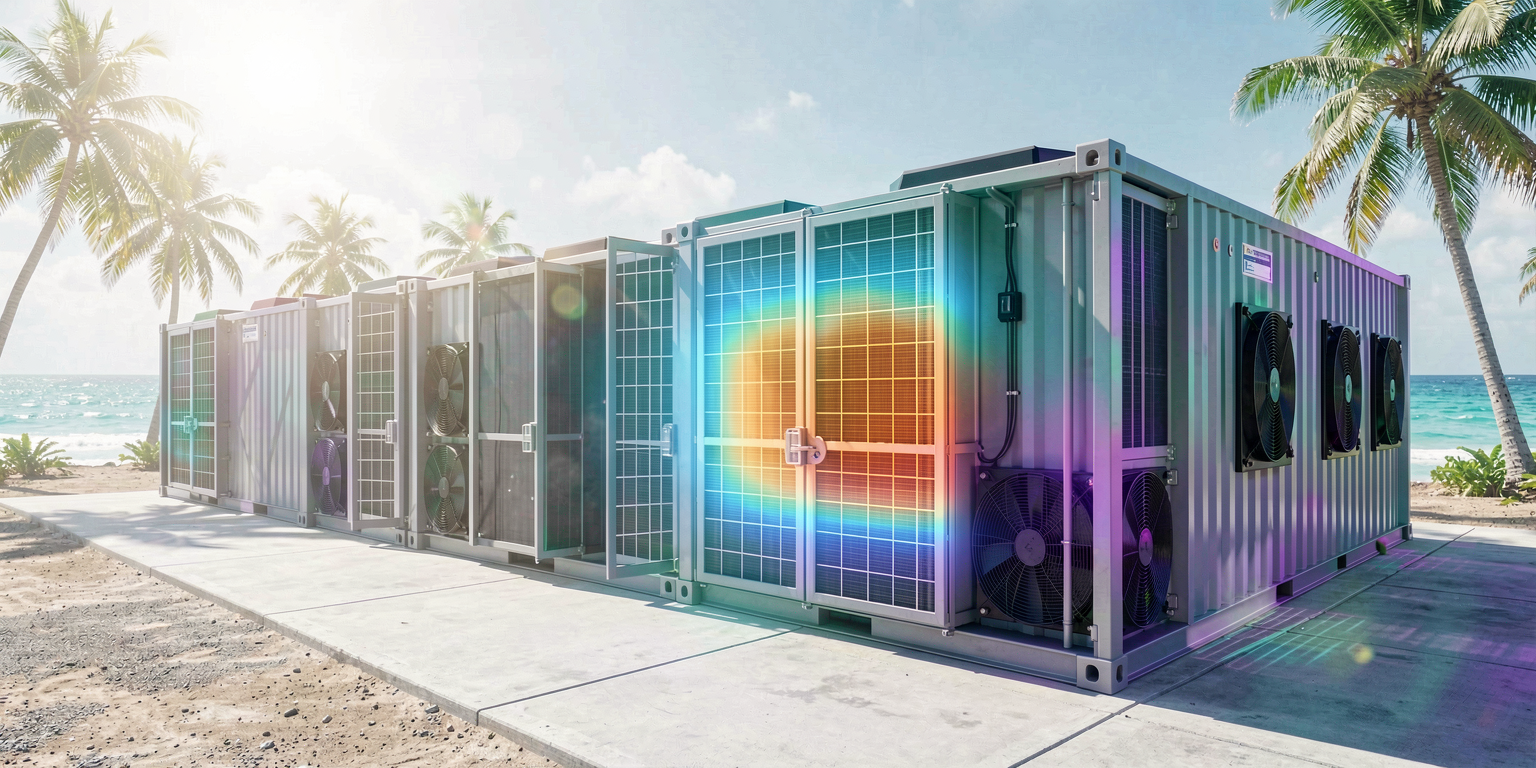
Grid-scale storage in a tropical climate — where cooling, not chemistry alone, decides lifetime and safety. (In-house render, illustration.)
A grid-scale battery is a chemical asset. In the heat and humidity of the Middle East, the Gulf or the Caribbean, the way it is cooled is the single biggest factor in how long it lasts — and whether it stays safe. Yet far too often, imported batteries are run abroad without the thermal discipline they were designed for.
Lithium cells have a comfort band. Run them hotter than that — or let temperatures drift unevenly across a rack — and calendar ageing accelerates sharply (the Arrhenius rule of thumb: roughly every ~10 °C of sustained over-temperature can halve a cell's calendar life). The same heat widens the spread between the strongest and weakest cell, and a widening spread is the earliest sign of a cell heading toward failure — and, in the worst case, thermal runaway.
It is an open secret that batteries are often handled less carefully outside their home market: cooling set up once and never tuned, fans and liquid-cooling loops left unverified, units pushed hard during the hottest hours precisely when they should be eased off. On a constrained island grid, where one battery matters, that is exactly the wrong place to learn this the hard way.
We are the vendor-agnostic control and connectivity layer — not the battery vendor. Whatever manufacturer's hardware is on site, we read it down to the register level and make thermal health part of every dispatch decision:
This is the same register-level connectivity we bring to the utility's control centre (e.g. IEC 60870-5-104) — and the same approach behind our response to Mauritius CEB's RFI-CPR-2026-10615 for grid-scale BESS network-support services.
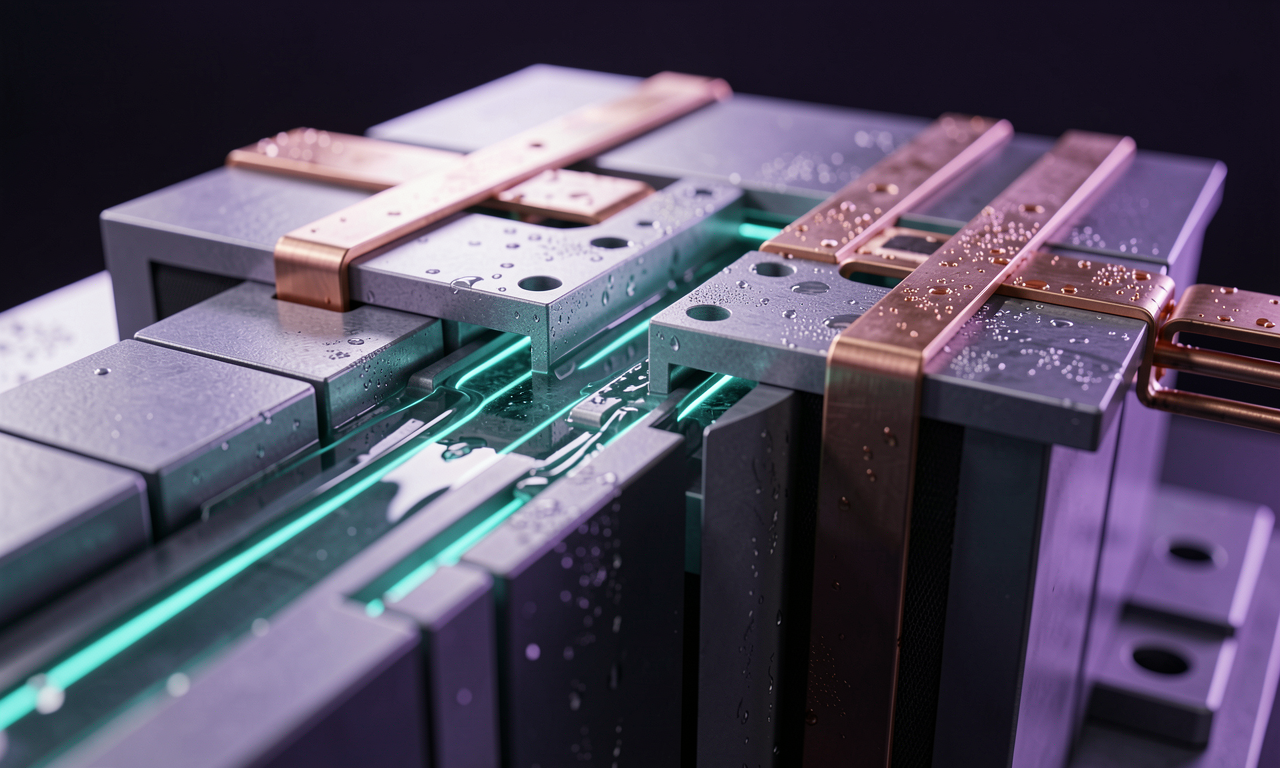
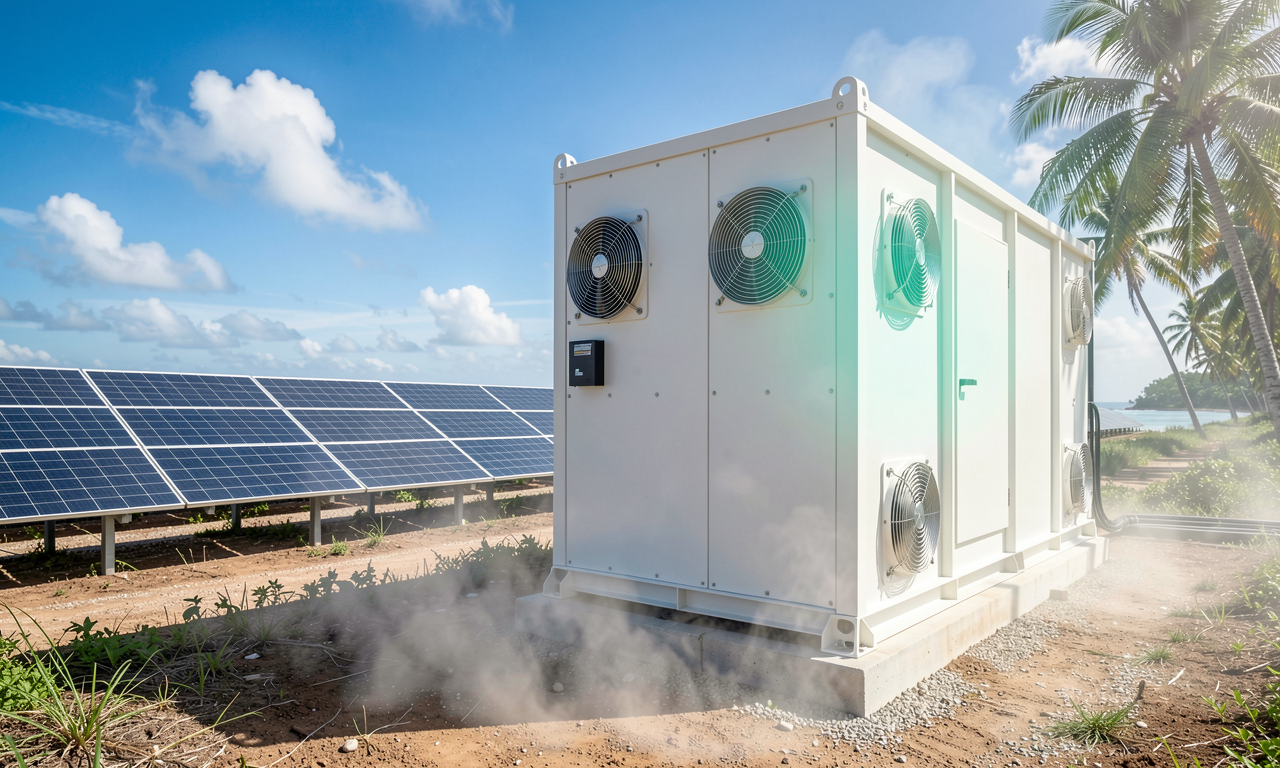
We have operated real generation and storage in Germany's power market for over 20 years, and we have been building the climate side of this for years: cooling analytics under the stromfee.energy brand, and our extreme-weather work that ties grid stress to temperature. Explore the building blocks:
Tell us the site and the climate. We will show you what a register-level thermal view — and heat-aware dispatch — would change for its lifetime, safety and revenue.
Honesty note: the ~10 °C / halved-calendar-life figure is a widely used industry rule of thumb (Arrhenius), not a measured Stromfee result; real degradation depends on chemistry, depth of discharge and duty. The capabilities above (TMS and cell-extremes monitoring at register level) reflect what our BESS-Engineer reads on real hardware. Stromfee Ai is the optimisation and connectivity layer, not the asset owner.
Calculate with real prices what a battery storage returns per year.
Calculate storage value →