How Stromfee brings AI into a swimming pool — the step-by-step path for pools and resorts in the Middle East
Explainer · AI in a swimming pool
A resort pool is one of the most energy-intensive parts of a hotel: pumps, heating or cooling, and water treatment run around the clock, and in the Gulf they do so against 40+ °C outside temperatures. Stromfee's approach is deliberately sequential — it starts by measuring what the pool actually does, checks that data for plausibility, and only then lets AI act on it. This page describes that path, step by step, for pool and wellness operators in the Middle East.
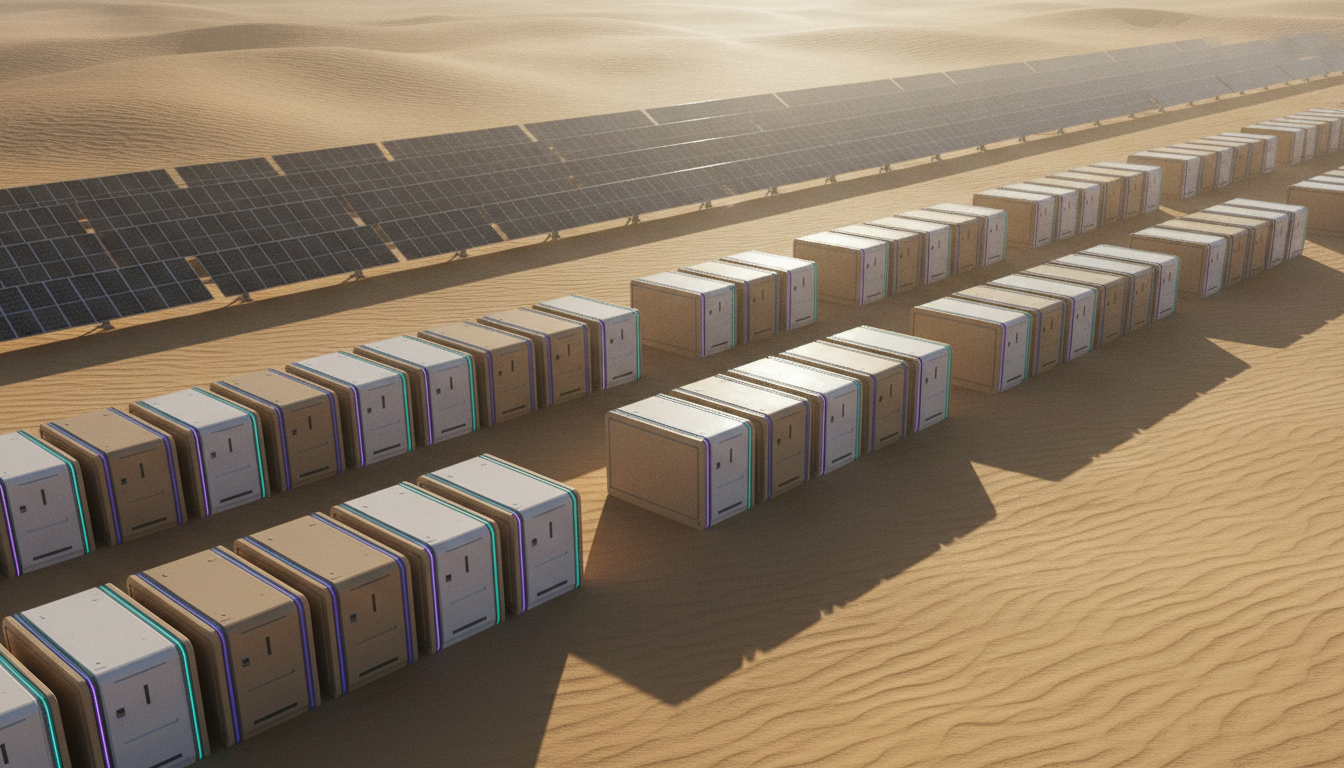
Why pools in the Middle East are an AI problem, not just a plumbing problem
In the Gulf region, solar floods the grid at midday and vanishes by evening, and wholesale prices can swing from negative to triple-digit within hours. A pool that pumps, heats, and disinfects on fixed timers ignores those swings completely and pays whatever the clock schedule happens to hit. Stromfee describes itself as the intelligence layer that reads these price swings and turns them into value through forecasting, dispatch, and battery optimisation — an approach proven on a German fleet and now offered for the Middle East.
The scale is real. Atlantis The Palm on the Palm Jumeirah in Dubai runs 1,548 rooms, the Aquaventure water park, 11 swimming pools, and 23 restaurants; its water-park pumps and pool thermostasis in 40+ °C ambient temperature make it one of the most energy-intensive hotels in the world. That is the kind of load profile where measuring first, before automating, actually matters.
Step 1 — Inquiry and Step 2 — Measurement
The path begins with an inquiry from the operator, not with hardware. Stromfee's integration principle is that its systems work with the energy data a site already uses and process it in real time, so the first practical step is to see that data. Integrating AI into an existing infrastructure is described as straightforward precisely because it reads the flows you already have rather than replacing them.
Measurement means capturing the pool's real behaviour: when pumps run and at what load, how much energy goes to heating or cooling, and how much goes to water treatment. As a rule of thumb from Stromfee's pool and spa work, filtration, UV disinfection, and chemical dosing together account for roughly 10% of a pool's energy use — a share that is easy to under-measure if you only look at the pump nameplate.
Step 3 — Plausibility check and Step 4 — Mobile measurement
Raw meter data is not trusted on its own. The plausibility step compares what the meters report against physical expectation — does the pump energy match the running hours, does the heating draw match the weather and occupancy, is a UV lamp drawing full power even when the pool is empty. Typical problems Stromfee looks for include backwashing on a fixed 24-hour timer whether the filter needs it or not, fixed chlorine dosing instead of demand-based dosing, and UV lamps running 24/7 at full output regardless of occupancy.
Where the fixed metering is thin, Stromfee adds mobile, temporary measurement to fill the gaps — for example on individual circuits such as a whirlpool. A whirlpool held at 40 °C around the clock, with jets running even when no one is in it, is a classic case where a fixed meter hides the waste and a dedicated measurement exposes it.
Step 5 — Digitisation and photos, Step 6 — RAG knowledge base
Once the measurement is trustworthy, the physical plant is digitised: the pumps, heat pumps or heaters, filters, UV units, dosing systems and their sensors are documented, including photos of the actual installation. This turns a room full of equipment into a structured model the AI can reason about.
That documentation feeds a retrieval-augmented (RAG) knowledge base, so the system answers from the site's own captured facts and equipment rather than from generic assumptions. The goal is that recommendations and control actions are grounded in what was actually measured and photographed at that specific pool.
Step 7 — Local operation and the AI actions it enables
The final step is a system that runs locally on the site's own energy data in real time, giving the operator control over their energy flows without heavy additional effort. Only at this point — after inquiry, measurement, plausibility, mobile measurement, digitisation and the knowledge base — does Stromfee let AI take actions.
Those actions are concrete. Pump optimisation uses guest-pattern analysis to drive VFD (variable-frequency) pump control, cited at up to 55% less pumping power. Heating management forecasts heat demand from weather and booking data and runs the heat pump during low-price hours, cited at up to 60% lower heating cost. Presence control activates jets, steam and lighting only when the wellness area is in use, cited at up to 45% lower attraction cost. On water treatment, a pressure sensor triggers backwashing only when filter pressure is high, ORP control doses chlorine only on demand, and occupancy sensors scale UV intensity to actual guest numbers. Stromfee frames the result as the same pool and the same comfort at a lower daily energy cost.
FAQ
Does Stromfee replace our existing pool control system?
No. Stromfee's systems are designed to work with the energy data a site already uses and process it in real time, so integration is described as straightforward and additive rather than a rip-and-replace of your existing infrastructure.
Why measure first instead of installing AI right away?
Because pool waste is usually hidden — fixed 24-hour backwash timers, constant chlorine dosing, UV lamps at full power on an empty pool. Measuring, then checking that data for plausibility and adding mobile measurement where needed, is how Stromfee makes sure the AI acts on real behaviour rather than assumptions.
What kinds of savings are cited for pool and spa applications?
Stromfee's pool and spa material cites up to 55% less pumping power via VFD control, up to 60% lower heating cost via price-aware heat-pump operation, and up to 45% lower attraction cost via presence control. These are figures from Stromfee's own pool and spa material and depend on the individual site.
Is this specific to the Middle East?
The method is general, but it fits the Gulf well: solar drives prices from negative to triple-digit within hours, and pools run against 40+ °C ambient temperatures, so price-aware dispatch of pumps and heating or cooling has an outsized effect. Stromfee offers the approach for the Middle East, built on experience from a German fleet.